


Airport Fixed Passenger Bridges: Structural Design and Engineering Approaches
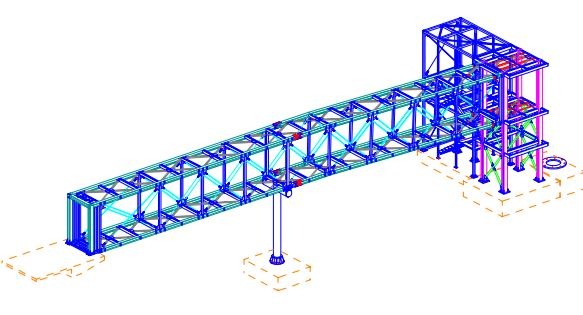
Airports are a critical part of the modern transportation network, and passenger bridges (also known as jet bridges or boarding bridges) are of great importance for the efficiency of airport operations and passenger comfort. In modern airports, passenger boarding bridges consist of two parts: the Fixed Loading Bridge, which provides the connection between the terminal building and the rotunda, and the Apron Drive Bridge, which provides the connection between the rotunda and the aircraft. Fixed passenger bridges facilitate passenger access to the aircraft by providing a safe and comfortable transition, unaffected by weather conditions. In this article, we will focus on the structural design and engineering approaches of fixed passenger bridges.
Erkam V. Ballı
11/28/20163 min read
1. Basic Features of Fixed Passenger Bridges
Fixed passenger bridges generally have a structure that is fixed to the terminal building and can extend toward the aircraft. These bridges provide passengers with direct access to the aircraft and speed up airport operations. Since fixed bridges have fewer moving parts compared to mobile bridges, their maintenance costs are lower and they have a longer service life.
2. Considerations in Structural Design
The design of fixed passenger bridges requires several factors to be taken into account. These factors include:
Load-Bearing Capacity: Bridges must be designed to carry the weight of passengers, luggage, and necessary equipment. Additionally, natural loads such as wind, snow, and earthquakes must be considered.
Material Selection: Bridges are generally made of lightweight but durable materials such as steel or aluminum. Steel is preferred for its high strength and flexibility. Material selection directly affects the weight and cost of the structure.
Earthquake Resistance: Especially in airports built in seismic zones, it is critical for passenger bridges to be resistant to earthquake loads. They should be designed in accordance with earthquake regulations, and technologies such as seismic isolators should be used.
Thermal Expansion: Bridges must be resistant to expansion and contraction caused by temperature changes. Therefore, expansion joints and flexible connections are used.
Fire Safety: Airports must have high standards in terms of fire safety. Bridges should be constructed with fire-resistant materials and emergency exit routes must be provided.
3. Structural Analysis and Calculations
The design of fixed passenger bridges requires detailed structural analysis and calculations. These analyses are performed to examine the behavior of the bridge under different load combinations. For example, as in the calculation report shared in the attachment, the following loads are taken into account:
Dead Loads: The self-weight of the bridge and fixed loads.
Live Loads: Moving loads such as passengers, luggage, and equipment.
Snow Load: The snow load that can accumulate on the bridge.
Wind Load: Horizontal loads applied to the bridge by the wind.
Earthquake Loads: Dynamic loads occurring during an earthquake.
These loads are modeled using structural analysis software to examine the bridge's behavior under various load combinations. The analysis results are used for sizing the bridge's load-bearing system and designing the connection details.
4. International Standards and Regulations
*ICAO (International Civil Aviation Organization) Standards:
Annex 14 – Aerodromes, Volume I: Aerodrome Design and Operations: Includes general requirements for airport design. Sections related to passenger bridges cover apron layout, aircraft types, connection points, and security issues.
Doc 9157 – Aerodrome Design Manual, Part 5 (Electrical Systems): Defines standards regarding the lighting and power requirements of passenger bridges.
*IATA (International Air Transport Association) Standards:
Airport Development Reference Manual (ADRM): Contains recommendations for the design of passenger bridges, capacity calculations, operational requirements, and integration with the airport.
IATA Airport Handling Manual (AHM): Covers standards ensuring compatibility with aircraft doors, height adjustments, and passenger comfort.
5. Connection Details and Assembly
Fixed passenger bridges generally consist of prefabricated elements and are assembled on-site. Therefore, designing connection details according to their assemblability and operating conditions is of great importance. Bolted connections are often preferred for ease of assembly and maintenance advantages. However, the correct sizing and tightening of bolts are critical for the safety of the structure.
6. Capacity Checks and Safety
In the final stage of structural design, capacity checks of the bridge's load-bearing elements are performed. These checks determine whether the bridge can safely carry the design and operational loads. The behavior of load-bearing elements and connection zones is examined in detail, particularly under dynamic loads such as earthquake and wind.
7. Conclusion
The structural design of passenger bridges, which are an indispensable part of airport operations, is one of the most important application areas of the engineering discipline. Proper material selection, detailed structural analysis, and the correct design of connection details ensure that the bridges are long-lasting and safe. Taking seismic loads into account in earthquake zones and considering horizontal dynamic loads in wind-dominant areas to make the structure resistant to these dynamic loads is of great importance for human life and property safety.
In airport projects, the design and construction of fixed passenger bridges is a complex process where engineering skills and technological innovations meet. During this process, acting in accordance with national and international standards is critical for the success of the project.

