Design, Loading Conditions, and Engineering Criteria of PAKS Steel Structural Systems in Metro Stations
Learn detailed information about the steel support design of platform screen door (PAKS) systems in metro stations, including loads, seismic effects, and engineering checks. Critical engineering solutions for safe and robust structures.
Erkam V. Ballı
12/21/20213 min read
PAKS Steel Structures in Metro Stations
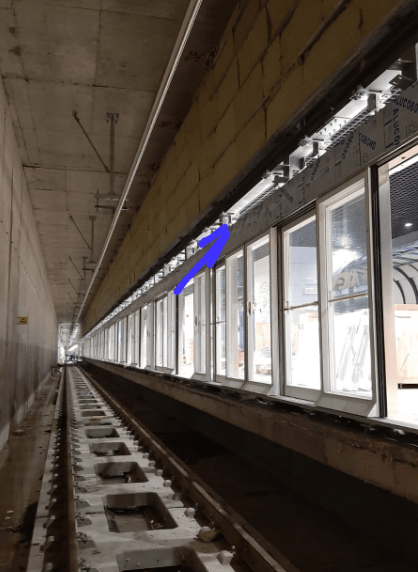
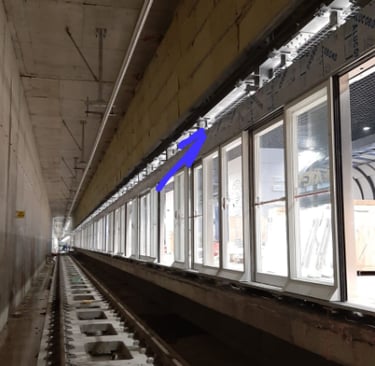
The term PAKS is the Turkish equivalent of systems referred to in English as Platform Screen Doors (PSD) or Platform Edge Doors (PED) and is an abbreviation of Peron Ayırıcı Kapı Sistemi (Platform Separation Door System). These systems are safety installations that prevent physical interaction between trains and station platforms.
PAKS systems are a relatively recent application in many metro networks worldwide and, in some lines, have been retrofitted into existing stations. Today, they are widely used—particularly in Turkey as well as in metro systems across Asia and Europe. These systems have become a mandatory safety component, especially for driverless metro lines (GoA3–GoA4) and stations with high passenger density.
PSD systems extend from the station floor to the ceiling, forming a completely enclosed barrier, whereas PED systems, although full-height, do not reach the ceiling and therefore do not create a fully enclosed volume. The selection of the system type depends on station geometry, HVAC concept, train operating scenarios, and budget constraints.
Primary Objectives of the PAKS System
The main objectives of PAKS systems are summarized below:
Passenger Safety:
Prevent accidental falls onto the track area, falls caused by pushing, suicide attempts, and potential criminal incidents.Control of Aerodynamic Effects (Passenger Safety + Aerodynamics):
Reduce or eliminate the wind and pressure effects felt by passengers due to the piston effect generated by trains moving inside tunnels, which in some cases may cause loss of balance.Improved HVAC Efficiency:
Increase station climate control efficiency by physically separating the station and tunnel environments, allowing HVAC systems to operate more effectively.Fire Safety:
Reduce fire risk by separating the track zone and the station zone into distinct areas.Acoustic Comfort:
Improve the sound quality of platform announcements by reducing background noise originating from tunnels and trains entering or leaving the station.
PAKS Steel Supporting System
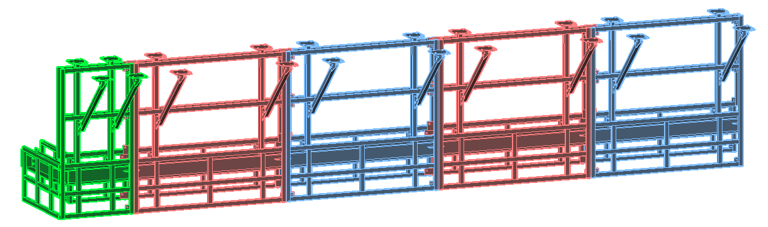
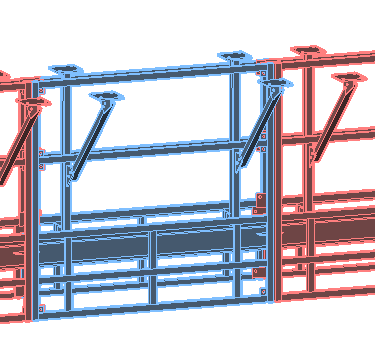
PAKS steel structures are defined as the steel structural supporting system that carries the glass panels, door leaves, and electromechanical equipment of the PAKS system. In metro projects, they are generally categorized as secondary steel works. Although independent from the main structural system, load transfer is directly provided to the reinforced concrete platform structure.
The system generally consists of the following components:
Vertical load-bearing columns:
The primary elements carrying both horizontal and vertical loads.Door head beams:
Structural members responsible for supporting door mechanisms and transferring dynamic loads.Cladding support frames (horizontal bands):
Structural elements supporting glass panels and cladding components.Chemical or cast-in anchors connected to the reinforced concrete platform:
Anchorage systems ensuring secure load transfer to the concrete structure.


Loads Considered in Design
During the design of the PAKS steel supporting system, the following loads are taken into consideration:
Dead Loads:
Self-weight of the steel supporting system, glass panels, door leaves, motors, actuators, cladding elements, and accessories.Live Loads:
Passenger pushing / crowd load effects, which are among the most critical live loads, as well as emergency and panic loads, are considered conservatively in accordance with relevant standards.Wind Loads:
Considered in the design only for above-ground or semi-open stations.Aerodynamic Loads:
Pressure and suction effects generated during train passages. These loads play a particularly significant role in full-height systems.Seismic Loads:
Although PAKS steel structures are classified as non-structural elements, they must not collapse, overturn, or experience anchor failure. Accordingly, equivalent seismic loads or spectral acceleration approaches are generally adopted.Erection and Maintenance Loads:
Temporary loads that may occur during installation and maintenance activities.
Mandatory Critical Design Checks
The following critical design checks must be performed:
Section capacity checks (N–M–V interaction)
Lateral displacement checks
Anchor tension, shear, and concrete cone failure checks
Local buckling checks of base plates
Weld and bolt strength checks
Fatigue analyses due to dynamic loading
Among these checks, anchorage safety and fatigue behavior are the most critical parameters for ensuring the long-term safe operation of the system. Detailed information and recommendations are provided in the following sections.
Piston Effect
The piston effect refers to the airflow generated when a train—or other fast-moving vehicles—travels through a confined space, such as tunnels and stations, pushing air forward and drawing air behind it.